City’s New Green Building Law Leaves Building Boards With Big Incoming Bills & Many Questions – NY1

Michael Scorrano, EN-POWER GROUP’s Managing Director and Founder, was recently interviewed by Michael Herzenberg of NY1 to discuss the challenges of New York City’s new green building laws.

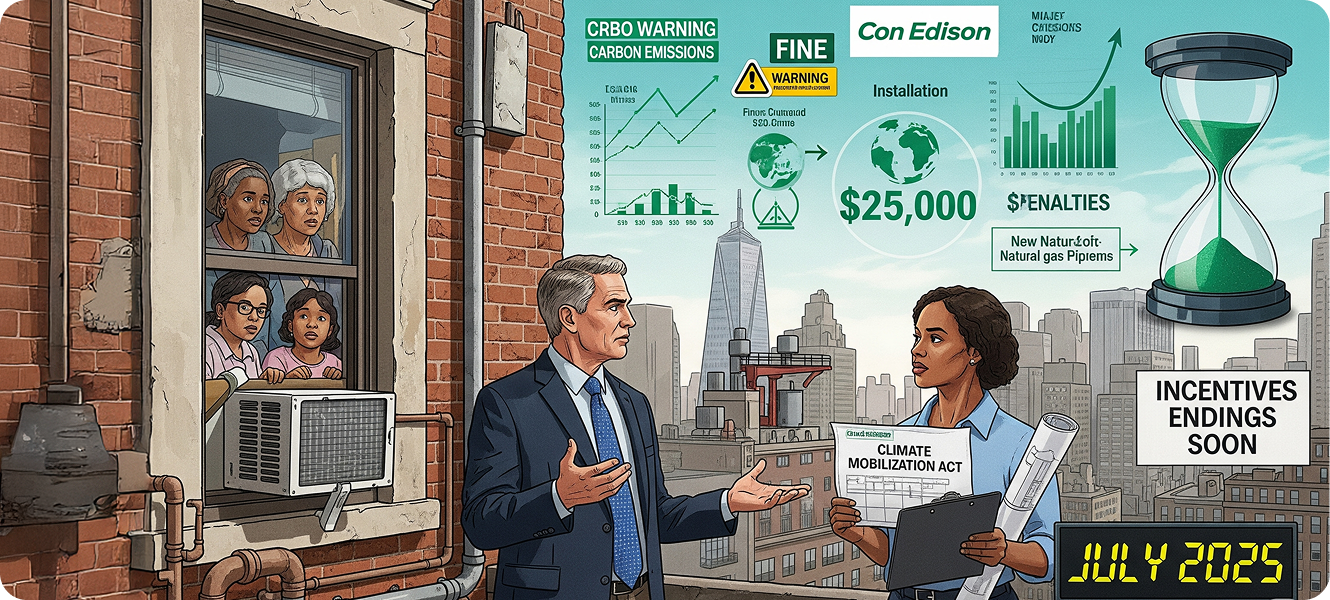
“The city council is still hashing out updates and clarifications to its green buildings law passed in April. It’s considered the most ambitious and exacting city mandated building emission measure in the world.  Some of the details though will take months and years to work out. That has building boards scrambling and struggling to figure out what this means for them.

Andrew Werner is the president of his Upper East Side co-op and the building was all set to convert its old oil heating system to natural gas.

‘Making our buildings more efficient is absolutely the best way to go,’ said Werner who hired EN-POWER GROUP, an Energy Consulting and Engineering company.

‘It is certainly one thing that would actually help on the energy footprint, carbon production, but there’s obviously other challenges,’ said Michael Scorrano of EN-POWER GROUP.

The big challenge he says is the city’s new Climate Mobilization Act, the so-called Green Buildings bill passed in April. It mandates that many city buildings 25,000 square feet or more dramatically reduce their carbon emissions by 2030 or face stiff fines.”

To watch the full interview segment by NY1 on June 29, 2019 >>>> click here

Posted in All

Caton Tower Co-op Moves to Cut Carbon Emissions

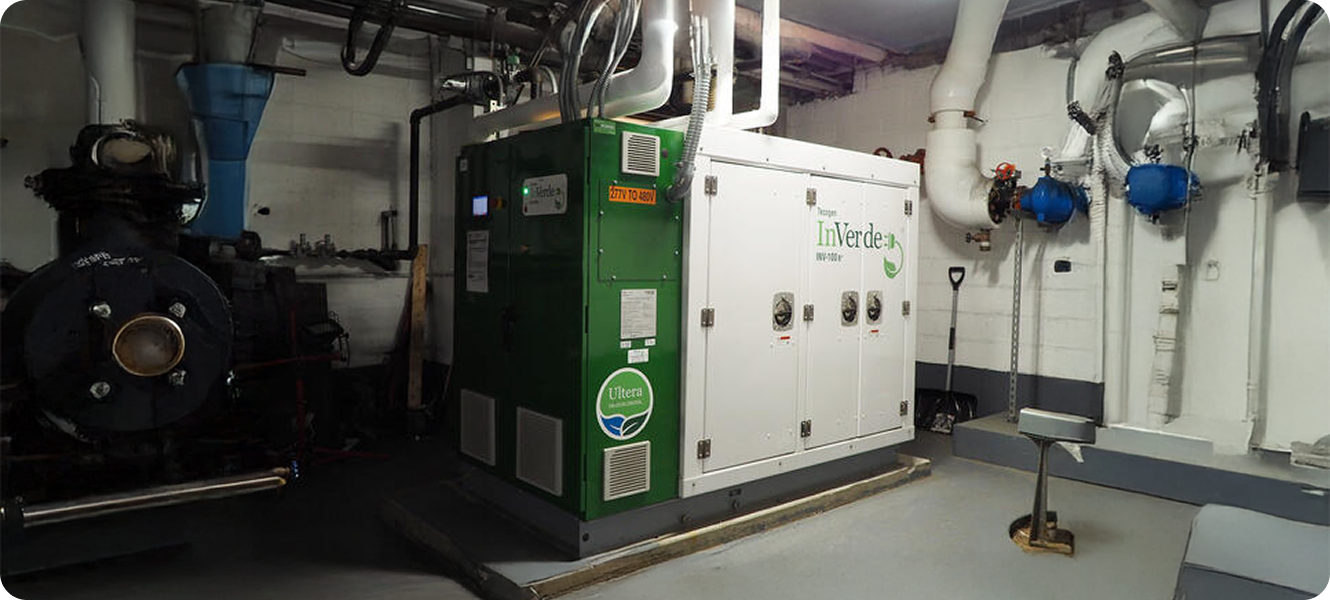
The co-op, located in the Kensington neighborhood, is installing a combined heat and power (CHP) system that will simultaneously produce electricity and hot water, saving energy and money while providing power back-up in an emergency. ‘It’ll offer payback along with resilience,’ says the EN-POWER GROUP’s director of engineering, professional engineer Amalia Cuadra, who oversaw this project.

The building-owned machine will generate enough electricity to keep common areas, including hallways and elevators, running – even during a power outage. Meanwhile, excess heat created while producing the power will be siphoned off to heat domestic water for the entire building. The tandem processes will save about $63,000 in annual thermal and electricity fees, and provide the residence with its own back-up power source during any future emergency.

… At the time, the co-op board was trouble-shooting an aging and inefficient building power plant.

‘Oil threatened to eat us alive,’ recalls Forte. ‘It was completely unsustainable, accounting for almost one-third of our $3 million operating budget.’ Cuadra was brought in to help the replacement of a boiler and chiller with more efficient gas-fired units, immediately cutting fuel costs in half and substantially increasing efficiency. And then came the aha moment: the board discovered cogeneration.

… Luckily, Caton Towers is the perfect size – the economics of cogeneration work best in buildings with 150-plus units – and the building had room for a turbine, although a $35,000 alteration was necessary. ‘We needed it situated unobtrusively, which required removing an unused chiller,’ Cuadra explains.

She also had to locate a heat-venting radiator outside, far from apartment windows but close enough to keep energy transport costs down. In the end, distance won over cost. ‘Running the pipes farther out added to the expense,’ says Cuadra.

… The logistics stretched planning out for more than four years before everything came together this summer. Installation begins this month, with completion scheduled before the worst of winter weather descends. Perfect timing for peace of mind – and savings. ‘This,’ Forte says, ‘will be a great long-term idea.’

The board also hopes cogeneration will help the building meet carbon-emission limits that begin in 2024, especially if the board ventures even into deeper sustainability waters. ‘Initially, we didn’t think about generating power to apartments,’ says Monarch. ‘It seemed too ambitious. But we may pursue renewable energy via CHP or solar for residences in the future.’ ”


To read the full September 11, 2019 article in Habitat >>>> click here

Posted in All

City to Buildings: We Want Your Carbon

“Deadlines are closer than they may appear. For co-op and condo boards that must meet the requirements of New York City’s new Local Law 97, which sets increasingly stringent goals for reducing buildings’ greenhouse-gas emissions in 2024, 2030 and beyond, the time to start their long-range capital planning is now.

… (Mark Chambers, director of the Mayor’s Office of Sustainability, says) ‘The first threshold, 2024, is designed to capture the worst-performing 20 percent. The next cap, 2030, is to capture the remainder. The foundation of this effort is carbon reduction.’ He’s referring to carbon dioxide, the most significant greenhouse gas. Buildings that fail to meet the goals will be fined $268 for every metric ton of carbon emissions over their limit – which can run into five figures quickly.

‘We don’t want your money,’ Chambers insists. ‘We want your carbon.’

…But what else should your building start doing to ensure that you meet the requirements? What strategy should you employ? And how do you calculate where you stand right now, so that you can set priorities?

Step 1

While a math-savvy board can probably calculate its building’s greenhouse-gas emissions on its own, it might want to leave the job to the same professional who calculates annual energy benchmarking for Local Laws 84 and 133. That’s not only because the formula is complicated but also because it uses the benchmarking figures that get entered into the federal Environmental Protection Agency’s database and measurement tool, the Energy Star Portfolio Manager.

Step 2

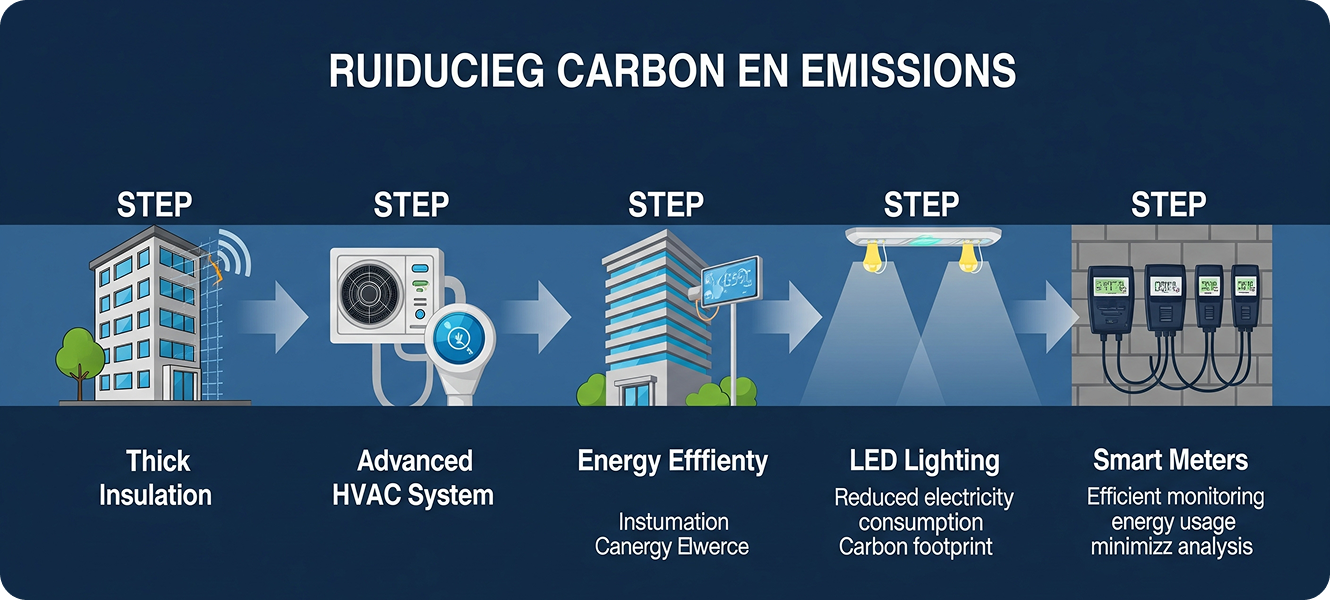
Now that you know where you stand, Step 2 is to create a strategy. ‘No one measure does it all,’ says Michael Scorrano, an engineer and the founder and managing director of the energy consultancy En-Power Group. ‘It may be a bunch of smaller measures, or it could be capital-improvement projects – maybe it is time to upgrade your heating system. Maybe it is time to look at your ventilation and air-conditioning system.’

…The specific capital-improvement projects that can help reduce your greenhouse-gas emissions will vary from building to building. A typical project, says Scorrano, includes replacing an absorption chiller, a refrigeration unit that converts heat into energy that drives a cooling system, and cogeneration, a natural-gas power plant in your building that generates both heat and electricity. Another project is a boiler replacement.

Step 3

Once you’ve settled on a multiyear capital plan and figured out a general budget, how will you pay for these initiatives?

… Fortunately, the Climate Mobilization Act itself contains provisions to help manage costs. For one, the city ‘may grant an adjustment of the annual building emissions limit’ to buildings under ‘financial hardship,’ as defined by specific metrics of arrears and taxes, or certain other particular circumstances. For another, the law establishes a sustainable-energy loan program used around the country. Called PACE, an acronym for Property Assessed Clean Energy, the program is available to cooperatives, though virtually never to condominiums. It allows boards to get long-term, inexpensive financing to do qualifying types of renovation projects that have a public benefit such as reducing greenhouse-gas emissions.

… And remember, these deadlines are closer than they appear. ‘This stuff is real and it’s looming, so boards need to be prepared,’ Scorrano of the En-Power Group says. ‘Start now contemplating what type of measures you can implement over the next 10 years. A lot of this stuff could overlap with capital improvements you’d need to make in the building anyway. Start engaging now so it’s not a panic to get this done last-minute. Be proactive. Anytime you can save energy, you might as well get the benefits as early as you can.’”


To read the full article in the September 2019 issue in Habitat Magazine >>>> click here

Posted in All

Celebrating Our Leaders: 2019 Awards Recipients

“Earlier this year, after an open call for nominations, committees of NESEA Members chose two members of our community to honor at the annual NESEA Night awards ceremony:

  • Mariel Eisenberg Hoffman was the inaugural recipient of the Kate Goldstein Emerging Leader Award, which recognizes a NESEA Member early in their career for their current engagement and their demonstrated potential to continue to meaningfully affect the future of NESEA.
  • Fred Davis joined a long list of individuals celebrated for their dedication as the recipient of the Distinguished Service Award, which recognizes a NESEA Member who has made a significant contribution of time and service to the organization.

Recently, NESEA brought Fred and Mariel together to interview each other about topics ranging from the history of NESEA, to what inspires them, to their career paths and the urgency of climate change.”

To read the highlights of the interview in the Fall 2019 issue of BuildingEnergy Magazine >>>> click here

Posted in All

Here Are the First Steps to Cutting Building Carbon Emissions

“Buildings are New York City’s biggest polluters, which is why the Climate Mobilization Act will require most co-op and condo boards to reduce their buildings’ carbon emissions sharply in coming years. The first deadline is the end of 2024, which is not far away. The first step all boards must take is to figure out exactly how much carbon their building is emitting.

Boards might want to leave that job to the same professional who calculates annual energy benchmarking for Local Laws 84 and 133. That’s not only because the formula is complicated but also because it uses the benchmarking figures, which get entered into the federal Environmental Protection Agency’s database and its measurement tool, the Energy Star Portfolio Manager.

… Now that you know where you stand, Step 2 is to create a strategy. “No one measure does it all,” says Michael Scorrano, an engineer and the founder and managing director of the energy consultancy En-Power Group. ‘It may be a bunch of smaller measures, or it could be capital-improvement projects – maybe it’s time to upgrade your heating system. Maybe it’s time to look at your ventilation and air-conditioning system.’

The specific capital-improvement projects that can help reduce your greenhouse-gas emissions will vary from building to building. Typical projects, says Scorrano, include an absorption chiller, a refrigeration unit that converts heat into energy that drives a cooling system, and cogeneration, a natural-gas power plant in your building that generates both heat and electricity. A third project is a boiler replacement.

Boards might also consider solar-panel arrays and green roofs, the latter involving vegetation that absorbs rainwater, provides insulation, and helps mitigate the ‘heat-island effect’ that makes urban areas warmer than rural ones. Advanced projects might include: converting from a fossil-fuel-based central boiler to electric-powered heat pumps; trigeneration, in which a second cogen unit combined with a chiller provides air-conditioning; and battery energy-storage systems (BESS), in which you can store the cogen electricity you generate, further reducing energy costs.”


To read the full December 20, 2019 article in Habitat  >>>> click here

Posted in All

The ABCs of Energy Grades

The ABCs of Energy Grades, written by EN-POWER GROUP’s Director of Energy Management Thomas Morrisson, was featured in Habitat’s March 2020 Issue.

“Energy benchmarking, as mandated by Local Law 84 and 133, requires buildings larger than 25,000 square feet, including co-ops and condominiums, to submit their annual energy and water usage to the city using the Environmental Protection Agency’s Portfolio Manager benchmarking tool. One of the results of the submission is a calculated score, known as an Energy Star score.

… The Energy Star score is also the basis for your building’s energy letter grade, which the city will begin awarding later this year. Based on your building’s energy use and corresponding Energy Star score, the city has created a grading system that translates the Energy Star scores into letter grades as follows:

  • 85 to 100: Grade A
  • 70 to 84: Grade B
  • 55 to 69: Grade C
  • 1 to 54: Grade D
  • Failure to Comply with Local Law 84: Grade F

… The letter grades are intended to motivate building owners and managers to cut their energy use and thus improve their grade. An A grade presumably will attract potential buyers and renters to a given building, while a C, D, or F grade will lower the building’s appeal.

… It’s simple: to improve a building’s letter grade, a co-op or condo board must reduce energy use. The typical first step in the process is to hire an engineering consultant to conduct a comprehensive energy audit. One of the primary goals of an audit is to identify potential energy-conservation measures, such as upgrading lighting, HVAC and building controls. Another goal is to identify operational deficiencies and low- or no-cost improvements that will result in reduced energy consumption. This is typically covered during retro-commissioning, the process of ensuring that the
energy systems in an existing building are installed according to the design intentions, are functionally tested, and are capable of being properly operated and maintained. The final goal of an audit is to develop a capital plan to implement retro-commissioning and energy conservation measures. The capital plan should be based on the cost of improvements, the potential energy savings and carbon-emission reductions, and the comfort and safety of residents.”


If you have a subscription to Habitat magazine, click here to review the article.

Posted in All

Capital Projects Are Complicated in the Age of Coronavirus

“The 155-unit landmarked co-op in the West Village had hired En-Power Group engineering firm to conduct its periodic energy and water audits mandated by Local Law 87. Auditors discovered that the rooftop cooling tower and the chillers were not performing well. Last summer, the chillers gave out, and the co-op board realized it was also time to replace the cooling tower. It would have been a challenging project under the best of circumstances. Then the coronavirus pandemic got added to the equation.

‘Our contract got finalized right before Christmas,’ says Amalia Cuadra, senior director of engineering at En-Power Group. ‘When Covid-19 hit, a lot of changes were going on within the Department of Buildings (DOB), which is not good when you need approval and permits from the Landmarks Preservation Commission (LPC). Everything slowed down, even though back then construction was still allowed.’

Despite difficulties, the DOB and LPC permits were secured, but even more permits were needed. ‘One was an after-hours variance permit,’ says Cuadra. ‘Usually, one can go through this process online, but everything had shut down at the DOB. We had to figure out a different way, and we found that one could walk into the DOB to get approval.’

The crane contractor, who was hired to hoist the new cooling tower onto the roof, also had to get approval from the Department of Transportation to block off the street. In addition, the crane had to be stationed in front of a firehouse, which required additional permits. ‘At that point, when we finally got all these approvals despite the difficult situation, it got worse’ says Cuadra, referring to the novel coronavirus that had begun sweeping the city. ‘All construction had to halt in the city unless it was an emergency or essential.’

The co-op board, its management and the engineering firm deemed this work essential. If the stay-at-home orders are extended, which seems likely, the health and safety of people confined to their homes could become compromised. ‘Sometimes those heat waves come early,’ says Cuadra. ‘Putting ACs in the windows was not an option, because it would take a lot of manpower and close contact with the residents to do so, and many windows are not lined up for that.’ Happily, the essential-construction permit was approved within 24 hours.

… Last weekend, most of the installation of the cooling tower was completed. Cuadra estimates it will take about four more weeks to replace the chillers and finalize all the different components. Work will progress slowly because contractors have to be very careful. Even though the essential work was approved, they have to adhere to the Executive Order 202.6. ‘This order means that the workers have to be protected,’ says Cuadra. ‘When you do construction work, there is a social distancing requirement, meaning two workers cannot be within six feet of each other’ – or co-op residents – ‘and they have to wear proper protection equipment.’

It’s turning out that nothing is simple in the age of coronavirus.”


To read the full April 8, 2020 article in Habitat >>>> click here

Posted in All

Thomas Morrisson Featured in HABITAT June 2020 Issue

EN-POWER GROUP is recently featured in Habitat Magazine’s podcast, Problem Solved! For Co-Ops and Condos, interview with Bill Morris.

EN-POWER GROUP proudly launches its new Service Page about Commissioning.

EN-POWER GROUP is recently featured in Habitat Magazine’s podcast, Problem Solved! For Co-Ops and Condos, interview with Bill Morris.

EN-POWER GROUP’s Director of Energy Management, Thomas Morrisson, was featured in HABITAT’s June 2020 Issue, which showcases problems encountered by multifamily properties and shed light on solutions for these problems.

Tom talked about an electric submetering project at  London Terrace Towers in Chelsea, Manhattan. The electricity consumption of this 700-unit co-op building went up significantly after ConEdison replaced some master meters in the building. Thus, the building engaged EN-POWER GROUP to install submeters, which would enable the board to not only decrease the costs but also “understand how they’re using electricity, both in the residential portion and the common areas of the building”. More importantly, as an approved service provider of the New York State Energy Research and Development Authority’s (NYSERDA’s) Real Time Energy Management (RTEM) Program, EN-POWER GROUP is able to enroll this project into the program and secure funding that covers 30% of the cost. As a result, the building can include metering of common area loads for both electricity and natural gas in the project scope without increasing the project budget. The project was held off due to COVID-19 and the NYS PAUSE executive order. “As soon as the moratorium on nonessential construction is lifted, then we’ll move forward.” Tom further explained that the it would be a good time to implement electric submetering projects because more people are transitioning to working from home and spending more time in their apartments.

HABITAT Magazine is providing free access to the June 2020 issue. Click here to review the article.

Posted in All

Michael Scorrano Featured in HABITAT June 2020 Issue

EN-POWER GROUP’s Managing Director and Founder,Michael Scorrano, was featured in HABITAT’s June 2020 Issue, which showcases problems encountered by multifamily properties and shed light on solutions for these problems.

Michael shared a chiller replacement project at 200 Central Park South with HABITAT. EN-POWER GROUP was the engineer and project manager for this project. The board of this 35-story multifamily property wanted to replace the old steam chiller to electric modular chiller plant to reduce carbon emissions and eliminate the usage of expensive rigging. Initially, the engineering team of EN-POWER GROUP planned for a single electricity shutdown to get the electrical equipment connected changed. However, the electricians found out that multiple shutdowns would be needed and causing concerning inconveniences for the shareholders in this 35-story buildings. The engineering team needed to come up with a solution to minimize the inconveniences to building residents. Eventually, EN-POWER GROUP brought in another electrician who was specialized in working on higher-voltage, higher-tension type of services. This electrician was able to do the work without turning the power off. Having the new electrician to do the work “live” increased the project costs; however, as highlighted by Michael, “the building realized that by making this change, it would minimize the impact to the building, and the board was more than willing to look at this alternative.” With the solution provided by the engineers, this chiller replacement project was smoothly implemented with minimal disruptions to the residents.

HABITAT Magazine is providing free access to the June 2020 issue. Click here to review the article.

For more details about the project at 200 Central Park South, click here to access the case study.

Posted in All

Why is Equipment Testing (Commissioning) Important and What Are Its Benefits?

EN-POWER GROUP proudly launches its new Service Page about Commissioning.

When installing new equipment at new constructions or existing buildings, commissioning is a critical process to ensure new building equipment and systems meet the owner’s project requirements. Yet, many building owners and managers are not fully aware of its importance and benefits. This new web page explains why commissioning is important and details the benefits, which includes:

  • Local law compliance,
  • Assurance of occupant comfort,
  • Operational cost reduction, and
  • Extended equipment lifespan.

Want to learn about how commissioning can help your building’s performance and reduce costs? Click here to access the Commissioning Service Page and find out more information.

Posted in All