
NYC’s New Climate Mobilization Act

New York City recently passed the ambitious Climate Mobilization Act, a package of bills and resolutions that aims to significantly reduce the City’s greenhouse gas emissions and fight against climate change.

The Climate Mobilization Act includes the following local laws, introductions, and resolutions:

Local Law 97 (Intro. 1253) – Reducing Building Greenhouse Gas Emissions
Starting in 2024, buildings over 25,000 square feet will be mandated to meet carbon emission limits. Buildings that exceed their designated emission limits will face financial penalties, which can be significant depending on the facility. This law will also initiate an emissions trading system, which will be studied and outlined by January 1st, 2021. Such a study will examine pricing mechanisms and credit verification. In addition, the law will develop a system of renewable energy credits (RECs) limited to NYS electric generation for up to 10% of compliance with the emission limit of a building.

Local Law 96 (Intro. 1252) – Establishing a Property Assessed Clean Energy (PACE) Program
NYC will establish a Property Assessed Clean Energy (PACE) Program, which is a voluntary financing mechanism that provides low-cost, long-term funding for energy efficiency projects. Such a program will enable more building owners to implement clean energy measures and thus reduce NYC’s greenhouse gas emissions.

Local Law 95 (Intro. 1251) – Adjusting Energy Letter Grade Ranges
Starting in 2020, buildings over 25,000 sqft must display their energy letter grades at all public entrances. The grade ranges have now been changed so the majority of buildings fall into the “D” grade category. The new letter grade ranges are:

Letter Grade Benchmarking Score (from LL84 data)
A 85 – 100
B 70 – 84
C 55 – 69
D 1 – 54
F Failure to comply with Local Law 84


Local Law 94 (Intro. 1032) – Requiring Green Roofs on NYC Buildings
New constructions and buildings undergoing certain major renovations will be required to include a green roof system or rooftop solar photovoltaic (PV) system.

Local Law 92 (Intro. 276) – Installing Green Roofs on Smaller Buildings
This bill will adjust requirements of Introduction 1032 for smaller buildings.

Local Law 93 (Intro. 1031) – Posting Information on the Installation of Green Roof  Systems
A newly established Office of Alternative Energy will be required to post on its website and share information regarding the installation of green roofs and other materials relating to green roof systems.

Resolution 66 – Green Roof Tax Abatement Resolution
This resolution calls upon the State Legislature to pass legislation that would increase property tax abatement for the installation of a green roof, incentivizing building owners to install green roofs.

Local Law 98 (Intro. 1317) – Clarifying the Inclusion of Large Wind Turbines
Department of Buildings (DOB) now has authority and obligation to develop clear standards for the design, construction, maintenance, and removal of large wind turbines in New York City.

Introduction 1318 – Replacement of Gas-Fired Power Plants
This bill mandates a feasibility evaluation of replacing NYC’s gas-fired power plants with battery storage systems powered by renewable sources.

Resolution 845 – Williams Pipeline Resolution
This resolution calls upon the New York State Department of Environmental Conservation to deny the Water Quality Certification permit for the construction of the Williams pipelines.

Introduction 1527 – Imposing Fee for Paper Bags
Starting March 1, 2020, the City will require a 5-cent fee to be imposed on paper bags distributed by stores.

The Climate Mobilization Act is the largest legislative initiatives any major city has exerted efforts on reducing greenhouse gas emissions, showing New York City’s commitment to combat climate change. The result of this Act is expected to be the equivalent of taking over one million cars off the road by 2030.


Posted in All

Michael Scorrano Featured in Habitat June 2019 Issue

EN-POWER GROUP’s Managing Director and Founder, Michael Scorrano, was featured in Habitat’s June 2019 Issue.

Michael spoke about the importance of project management responsiveness, which is crucial when unexpected delays hit projects. He highlighted a recent building-wide gas conversion project that had been affected by the construction of NYC’s Second Avenue Subway and service delivery by Con Edison.  “… Delays happened, and the Board had to make a very big decision before the cooling season arrived; take a chance that we would be able to bring the new chiller onto the roof, or use the old equipment (and steam) for one more season.” To avoid service disruptions, EN-POWER held charrettes with all stakeholders: Con Edison, the Second Avenue Subway construction team, and the Board to ensure transparency between all parties and that a realistic timeline could be established and met. These stakeholder meetings lead to the creation of a contingency plan, which was ultimately adhered to in order to protect the building’s utility service and successfully avoid any service disruptions.

If you have a subscription to Habitat magazine, click here to review the article.

Posted in All

There’s No Time Like Real Time

“1 Big Thing: Real Time Energy Management.

Say what? Also known as RTEM, it’s at the beginning stages of becoming something every co-op and condo will want. It’s a cutting-edge technology that collects live performance data about your building’s energy systems and equipment levels in real time. This data is continuously pushed to the cloud, where it is used to help reduce energy consumption and provide alerts about potential equipment anomalies.

And the point? To make sure your building is running right. Going beyond a typical fixed schedule of maintenance and on-the-fly fixes, RTEM can identify problems before a fix is required. It can also combine predictive forecasting and artificial intelligence so that a building’s systems can react to dynamic events, such as weather.

… Finding your ROI. As with any energy upgrade, the cost of RTEM has to be justified. The goal, says Thomas Morrisson, director of energy management at EN-POWER GROUP, is to monitor systems that will have the biggest impact on the bottom line of a building – usually heating and cooling. ‘That’s where you have the ability to make the most changes and drive the most energy savings,’ he says.

How it’s playing. 308 West 103rd Street has hopped on the RTEM bandwagon. This 73-unit co-op has just about finished converting its boiler from oil to gas, and in the process it had to upgrade its 40-year old boiler-control system. Halstead Management’s Barry Chafetz, the co-op’s property manager, ran the numbers: the central control system was going to cost about $34,000. When he added RTEM capabilities to the central control system, the cost rose to $50,344. But incentives of $15,000 from NYSERDA brought the cost back down to $35,241.

… About those incentives. The program – and the incentives – are vendor-based, rather than performance-based  This means that you will hire an approved vendor who specs out the needed RTEM hardware and software. NYSERDA’s basic plan for multifamily properties offers a cost share of up to 30 percent of the total project cost, plus an ongoing cost share for RTEM service contracts for up to five years. NYSERDA requires that you have at, the minimum, a one-year service contract. This covers monitoring, advising and general tweaking of your building systems from your vendor. NYSERDA has vetted and approved 75 vendors (you can find a list here), but only about 45 of them are active. If a vendor doesn’t submit at least two projects per year, it is de-activated from the list. To learn more about the program, click here.”

To read the full April 23, 2019 article in Habitat >>>> click here

Posted in All

An Electric Success Story – Habitat Magazine

Thomas Morrisson, Director of Energy Management at EN-POWER GROUP, spoke with Habitat Magazine about the benefits and challenges of residential building submetering.

“…when owners start to see accurate electric bills, they start to think twice about how much they are paying. Generally speaking, we find that residents reduce their electrical usage anywhere from 20 to 25 percent as a result of a submeter conversion.” Thomas outlines some of the logistical and physical installation challenges of submetering, including resident education.

“Once the meters were installed, the board began fielding questions from residents. ‘What does this all mean? What is a kilowatt/hour, and what is a kilowatt? How is the bill calculated? How do I read this bill? How do I read my meter?’ We scheduled several educational sessions to answer these questions, and we also explained what kind of things affected electrical consumption. We went over the items that were easy to change – like switching from incandescent to LED bulbs – as well as the more costly upgrades that would save electricity.”

To read the full June, 2019 article in Habitat >>>> click here

Posted in All

City’s New Green Building Law Leaves Building Boards With Big Incoming Bills & Many Questions – NY1

Michael Scorrano, EN-POWER GROUP’s Managing Director and Founder, was recently interviewed by Michael Herzenberg of NY1 to discuss the challenges of New York City’s new green building laws.

“The city council is still hashing out updates and clarifications to its green buildings law passed in April. It’s considered the most ambitious and exacting city mandated building emission measure in the world.  Some of the details though will take months and years to work out. That has building boards scrambling and struggling to figure out what this means for them.

Andrew Werner is the president of his Upper East Side co-op and the building was all set to convert its old oil heating system to natural gas.

‘Making our buildings more efficient is absolutely the best way to go,’ said Werner who hired EN-POWER GROUP, an Energy Consulting and Engineering company.

‘It is certainly one thing that would actually help on the energy footprint, carbon production, but there’s obviously other challenges,’ said Michael Scorrano of EN-POWER GROUP.

The big challenge he says is the city’s new Climate Mobilization Act, the so-called Green Buildings bill passed in April. It mandates that many city buildings 25,000 square feet or more dramatically reduce their carbon emissions by 2030 or face stiff fines.”

To watch the full interview segment by NY1 on June 29, 2019 >>>> click here

Posted in All

Caton Tower Co-op Moves to Cut Carbon Emissions

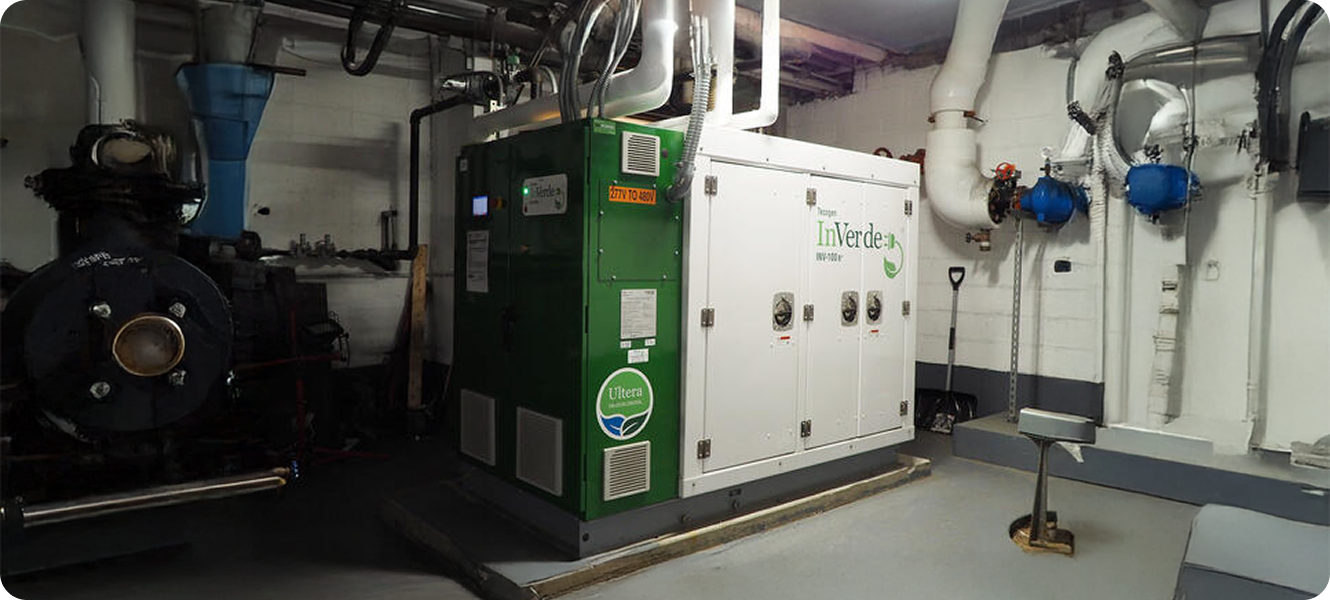
The co-op, located in the Kensington neighborhood, is installing a combined heat and power (CHP) system that will simultaneously produce electricity and hot water, saving energy and money while providing power back-up in an emergency. ‘It’ll offer payback along with resilience,’ says the EN-POWER GROUP’s director of engineering, professional engineer Amalia Cuadra, who oversaw this project.

The building-owned machine will generate enough electricity to keep common areas, including hallways and elevators, running – even during a power outage. Meanwhile, excess heat created while producing the power will be siphoned off to heat domestic water for the entire building. The tandem processes will save about $63,000 in annual thermal and electricity fees, and provide the residence with its own back-up power source during any future emergency.

… At the time, the co-op board was trouble-shooting an aging and inefficient building power plant.

‘Oil threatened to eat us alive,’ recalls Forte. ‘It was completely unsustainable, accounting for almost one-third of our $3 million operating budget.’ Cuadra was brought in to help the replacement of a boiler and chiller with more efficient gas-fired units, immediately cutting fuel costs in half and substantially increasing efficiency. And then came the aha moment: the board discovered cogeneration.

… Luckily, Caton Towers is the perfect size – the economics of cogeneration work best in buildings with 150-plus units – and the building had room for a turbine, although a $35,000 alteration was necessary. ‘We needed it situated unobtrusively, which required removing an unused chiller,’ Cuadra explains.

She also had to locate a heat-venting radiator outside, far from apartment windows but close enough to keep energy transport costs down. In the end, distance won over cost. ‘Running the pipes farther out added to the expense,’ says Cuadra.

… The logistics stretched planning out for more than four years before everything came together this summer. Installation begins this month, with completion scheduled before the worst of winter weather descends. Perfect timing for peace of mind – and savings. ‘This,’ Forte says, ‘will be a great long-term idea.’

The board also hopes cogeneration will help the building meet carbon-emission limits that begin in 2024, especially if the board ventures even into deeper sustainability waters. ‘Initially, we didn’t think about generating power to apartments,’ says Monarch. ‘It seemed too ambitious. But we may pursue renewable energy via CHP or solar for residences in the future.’ ”


To read the full September 11, 2019 article in Habitat >>>> click here

Posted in All

City to Buildings: We Want Your Carbon

“Deadlines are closer than they may appear. For co-op and condo boards that must meet the requirements of New York City’s new Local Law 97, which sets increasingly stringent goals for reducing buildings’ greenhouse-gas emissions in 2024, 2030 and beyond, the time to start their long-range capital planning is now.

… (Mark Chambers, director of the Mayor’s Office of Sustainability, says) ‘The first threshold, 2024, is designed to capture the worst-performing 20 percent. The next cap, 2030, is to capture the remainder. The foundation of this effort is carbon reduction.’ He’s referring to carbon dioxide, the most significant greenhouse gas. Buildings that fail to meet the goals will be fined $268 for every metric ton of carbon emissions over their limit – which can run into five figures quickly.

‘We don’t want your money,’ Chambers insists. ‘We want your carbon.’

…But what else should your building start doing to ensure that you meet the requirements? What strategy should you employ? And how do you calculate where you stand right now, so that you can set priorities?

Step 1

While a math-savvy board can probably calculate its building’s greenhouse-gas emissions on its own, it might want to leave the job to the same professional who calculates annual energy benchmarking for Local Laws 84 and 133. That’s not only because the formula is complicated but also because it uses the benchmarking figures that get entered into the federal Environmental Protection Agency’s database and measurement tool, the Energy Star Portfolio Manager.

Step 2

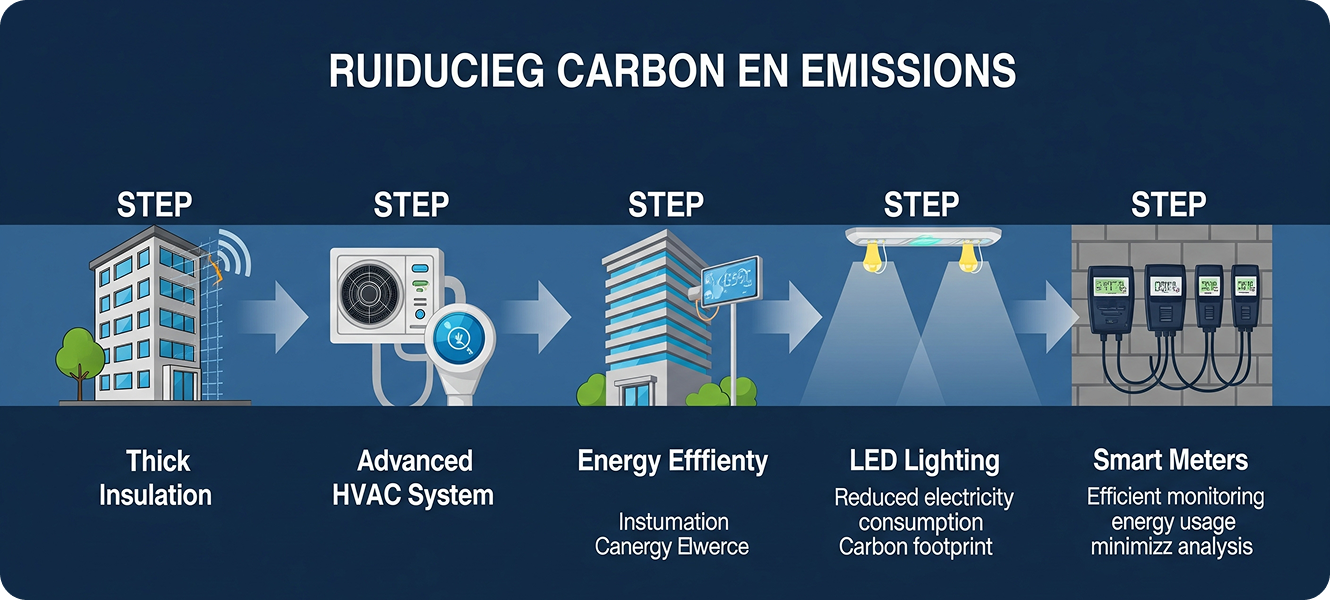
Now that you know where you stand, Step 2 is to create a strategy. ‘No one measure does it all,’ says Michael Scorrano, an engineer and the founder and managing director of the energy consultancy En-Power Group. ‘It may be a bunch of smaller measures, or it could be capital-improvement projects – maybe it is time to upgrade your heating system. Maybe it is time to look at your ventilation and air-conditioning system.’

…The specific capital-improvement projects that can help reduce your greenhouse-gas emissions will vary from building to building. A typical project, says Scorrano, includes replacing an absorption chiller, a refrigeration unit that converts heat into energy that drives a cooling system, and cogeneration, a natural-gas power plant in your building that generates both heat and electricity. Another project is a boiler replacement.

Step 3

Once you’ve settled on a multiyear capital plan and figured out a general budget, how will you pay for these initiatives?

… Fortunately, the Climate Mobilization Act itself contains provisions to help manage costs. For one, the city ‘may grant an adjustment of the annual building emissions limit’ to buildings under ‘financial hardship,’ as defined by specific metrics of arrears and taxes, or certain other particular circumstances. For another, the law establishes a sustainable-energy loan program used around the country. Called PACE, an acronym for Property Assessed Clean Energy, the program is available to cooperatives, though virtually never to condominiums. It allows boards to get long-term, inexpensive financing to do qualifying types of renovation projects that have a public benefit such as reducing greenhouse-gas emissions.

… And remember, these deadlines are closer than they appear. ‘This stuff is real and it’s looming, so boards need to be prepared,’ Scorrano of the En-Power Group says. ‘Start now contemplating what type of measures you can implement over the next 10 years. A lot of this stuff could overlap with capital improvements you’d need to make in the building anyway. Start engaging now so it’s not a panic to get this done last-minute. Be proactive. Anytime you can save energy, you might as well get the benefits as early as you can.’”


To read the full article in the September 2019 issue in Habitat Magazine >>>> click here

Posted in All

Celebrating Our Leaders: 2019 Awards Recipients

“Earlier this year, after an open call for nominations, committees of NESEA Members chose two members of our community to honor at the annual NESEA Night awards ceremony:

  • Mariel Eisenberg Hoffman was the inaugural recipient of the Kate Goldstein Emerging Leader Award, which recognizes a NESEA Member early in their career for their current engagement and their demonstrated potential to continue to meaningfully affect the future of NESEA.
  • Fred Davis joined a long list of individuals celebrated for their dedication as the recipient of the Distinguished Service Award, which recognizes a NESEA Member who has made a significant contribution of time and service to the organization.

Recently, NESEA brought Fred and Mariel together to interview each other about topics ranging from the history of NESEA, to what inspires them, to their career paths and the urgency of climate change.”

To read the highlights of the interview in the Fall 2019 issue of BuildingEnergy Magazine >>>> click here

Posted in All

Here Are the First Steps to Cutting Building Carbon Emissions

“Buildings are New York City’s biggest polluters, which is why the Climate Mobilization Act will require most co-op and condo boards to reduce their buildings’ carbon emissions sharply in coming years. The first deadline is the end of 2024, which is not far away. The first step all boards must take is to figure out exactly how much carbon their building is emitting.

Boards might want to leave that job to the same professional who calculates annual energy benchmarking for Local Laws 84 and 133. That’s not only because the formula is complicated but also because it uses the benchmarking figures, which get entered into the federal Environmental Protection Agency’s database and its measurement tool, the Energy Star Portfolio Manager.

… Now that you know where you stand, Step 2 is to create a strategy. “No one measure does it all,” says Michael Scorrano, an engineer and the founder and managing director of the energy consultancy En-Power Group. ‘It may be a bunch of smaller measures, or it could be capital-improvement projects – maybe it’s time to upgrade your heating system. Maybe it’s time to look at your ventilation and air-conditioning system.’

The specific capital-improvement projects that can help reduce your greenhouse-gas emissions will vary from building to building. Typical projects, says Scorrano, include an absorption chiller, a refrigeration unit that converts heat into energy that drives a cooling system, and cogeneration, a natural-gas power plant in your building that generates both heat and electricity. A third project is a boiler replacement.

Boards might also consider solar-panel arrays and green roofs, the latter involving vegetation that absorbs rainwater, provides insulation, and helps mitigate the ‘heat-island effect’ that makes urban areas warmer than rural ones. Advanced projects might include: converting from a fossil-fuel-based central boiler to electric-powered heat pumps; trigeneration, in which a second cogen unit combined with a chiller provides air-conditioning; and battery energy-storage systems (BESS), in which you can store the cogen electricity you generate, further reducing energy costs.”


To read the full December 20, 2019 article in Habitat  >>>> click here

Posted in All

The ABCs of Energy Grades

The ABCs of Energy Grades, written by EN-POWER GROUP’s Director of Energy Management Thomas Morrisson, was featured in Habitat’s March 2020 Issue.

“Energy benchmarking, as mandated by Local Law 84 and 133, requires buildings larger than 25,000 square feet, including co-ops and condominiums, to submit their annual energy and water usage to the city using the Environmental Protection Agency’s Portfolio Manager benchmarking tool. One of the results of the submission is a calculated score, known as an Energy Star score.

… The Energy Star score is also the basis for your building’s energy letter grade, which the city will begin awarding later this year. Based on your building’s energy use and corresponding Energy Star score, the city has created a grading system that translates the Energy Star scores into letter grades as follows:

  • 85 to 100: Grade A
  • 70 to 84: Grade B
  • 55 to 69: Grade C
  • 1 to 54: Grade D
  • Failure to Comply with Local Law 84: Grade F

… The letter grades are intended to motivate building owners and managers to cut their energy use and thus improve their grade. An A grade presumably will attract potential buyers and renters to a given building, while a C, D, or F grade will lower the building’s appeal.

… It’s simple: to improve a building’s letter grade, a co-op or condo board must reduce energy use. The typical first step in the process is to hire an engineering consultant to conduct a comprehensive energy audit. One of the primary goals of an audit is to identify potential energy-conservation measures, such as upgrading lighting, HVAC and building controls. Another goal is to identify operational deficiencies and low- or no-cost improvements that will result in reduced energy consumption. This is typically covered during retro-commissioning, the process of ensuring that the
energy systems in an existing building are installed according to the design intentions, are functionally tested, and are capable of being properly operated and maintained. The final goal of an audit is to develop a capital plan to implement retro-commissioning and energy conservation measures. The capital plan should be based on the cost of improvements, the potential energy savings and carbon-emission reductions, and the comfort and safety of residents.”


If you have a subscription to Habitat magazine, click here to review the article.

Posted in All